







If a client, landlord or general contractor asks you for proof of insurance, they may specifically request a certificate of insurance. For many trades, a certificate of insurance for contractors is the last document standing between a signed job and the first day on site. So, what is a certificate of insurance, and why does it matter?
A certificate of insurance, or COI, is a document that summarizes important details about your business insurance policies. It helps another party confirm that certain coverage is in place before you sign a contract, enter a job site or begin work. Understanding how COIs work can help you avoid confusion, delays and last-minute insurance problems.
This guide draws on Episode 8 of Fully Covered, the podcast from Absolute Insurance Agency, an independent insurance agency in Clive, Iowa, serving contractors across the Des Moines metro, including West Des Moines, Urbandale and Waukee. Its guests are Jeff Eastvold, founder, President and CEO, and Dan Bell, Vice President.
What Is a Certificate of Insurance?
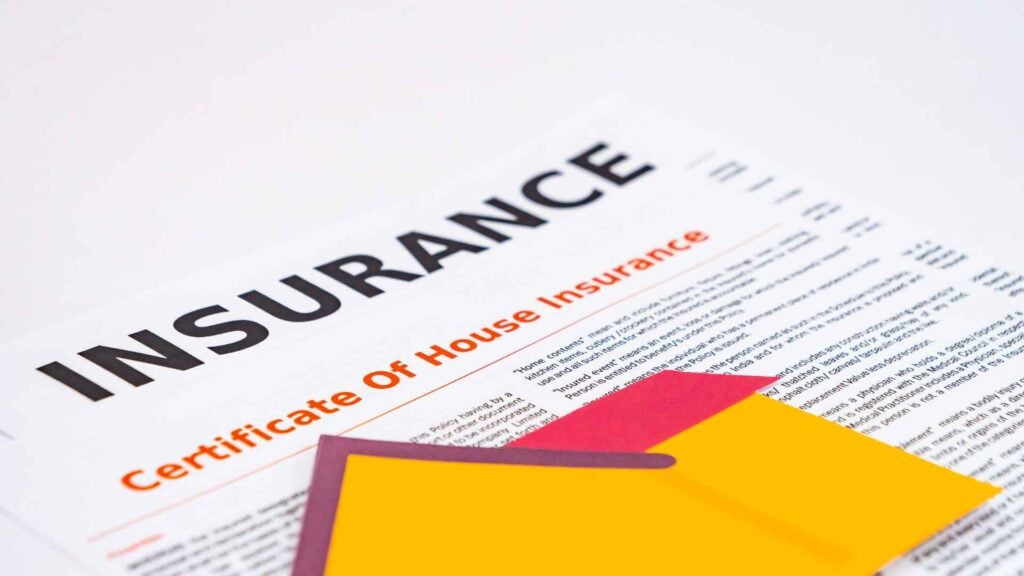
A certificate of insurance is a summary of insurance coverage in effect when the certificate is issued. Businesses commonly use it to show clients, property owners, vendors and contractors that they carry certain types and limits of insurance.
Dan Bell calls it “a snapshot in time of what your policy has”: the liability limits, endorsements and named insured on an active policy at that exact moment.
The certificate is not the insurance policy itself and does not change the protection provided by it. Instead, it gives the requesting party a convenient way to review key information.
Many certificates use standardized forms developed by ACORD, which creates forms and data standards for the insurance industry. For business owners, the purpose is practical: help another party verify insurance information tied to a contract, lease or project.
What Information Is Included on a COI?
A typical certificate lists the insured business name and address, the insurance agency or producer, the insurance companies providing coverage, policy numbers, effective dates, expiration dates and coverage limits.
The certificate can also identify different types of business insurance, such as general liability, commercial auto, workers’ compensation and umbrella or excess liability coverage. Other policies may appear when relevant.
A certificate may also identify the certificate holder and reference additional insured status when applicable. The policy and endorsements, however, determine whether that coverage actually exists. A COI does not contain every condition or exclusion.
Why Do Businesses Need Certificates of Insurance?
A COI often matters when one business wants confirmation that another has insurance before work begins. A property owner may require general liability coverage before a contractor enters a job site. A landlord may request proof before a commercial tenant moves in.
These requests help businesses manage risk and confirm that vendors, tenants or contractors carry coverage required by an agreement. The U.S. Small Business Administration notes that insurance needs vary by business risk and legal requirements. A certificate offers a quick way to verify selected policy information without requesting the full contract.
Dan Bell’s advice is to ask any subcontractor for a COI before work starts, because “the time to find that out is not when the roof has been removed from someone’s home, a thunderstorm rolls in, and all the drywall is now on the floor.”
When Will a Contractor or Business Be Asked for a COI?
You will usually be asked for a COI when you sign a commercial lease, bid on work, become an approved vendor, take part in an event or work as a subcontractor, and the request can arrive with little notice.
Jeff Eastvold says most of the agency’s contractors provide one for every job, especially when they subcontract for a general contractor.
Construction companies see COI requests often, but so do landscapers, consultants, cleaning companies, transportation businesses and event vendors. Since requirements vary, review the contract before asking your agent to issue anything.
What Types of Insurance Can Appear on a COI?
A COI can list any of the coverages below, along with other policies a contract calls for.
General Liability Insurance
General liability insurance is one of the most commonly requested coverages on a certificate. It can help address certain claims involving third-party bodily injury, property damage and other covered liability exposures.
Commercial Auto Insurance
If your company uses vehicles for business, a contract may require proof of commercial auto liability coverage.
Workers’ Compensation Insurance
Businesses with employees may need workers’ compensation coverage based on applicable state law. Iowa Code section 87.1 requires covered employers to insure their workers’ compensation liability unless the law exempts them, and Jeff Eastvold puts it plainly: “If they have employees, they need to have workers’ compensation.”
Umbrella or Excess Liability Insurance
Some contracts require limits higher than those provided by an underlying policy. Umbrella or excess liability coverage may provide additional limits, depending on how the policy is written.
Is a COI the Same as an Insurance Policy?
No, a certificate of insurance is not the policy itself.
Your insurance policy is the contract between you and the insurance company. It contains the coverage terms, exclusions, conditions, limits and endorsements that determine how coverage applies.
In its Bulletin 10-04, the Iowa Insurance Division requires certificates issued for property or operations in Iowa to state that they are issued as a matter of information only and do not amend, extend or alter the coverage of the referenced policy.
Wording on a certificate cannot create protection that does not exist in the policy. If a contract requires a specific endorsement or coverage feature, your agent may need to verify whether the actual policy satisfies that requirement.
Does a COI Guarantee Coverage?
No, a certificate does not guarantee that every claim will be covered.
Coverage depends on the facts of a claim and the terms of the policy in force. A COI may show that a policy exists and list certain limits, but it cannot summarize every exclusion, condition or limitation.
If a client requests wording that changes the insurance contract, an endorsement or policy change may be needed.
What Is the Difference Between a Certificate Holder and an Additional Insured?
A certificate holder only receives proof of your insurance, while an additional insured may gain certain protection under your policy through an endorsement, so the two terms are not interchangeable.
A certificate holder is the person or organization receiving the certificate as evidence of insurance. Being listed as the certificate holder does not automatically make that party an insured under your policy.
An additional insured may receive certain protections under another party’s policy when the policy and applicable endorsement provide them.
For example, a general contractor may require a subcontractor to name it as an additional insured for certain liability connected to the subcontractor’s work. Simply adding a name to the certificate does not create that status. The endorsement and policy language control.
As Dan Bell put it on Fully Covered, being a certificate holder “does not create any additional rights to the policy,” so “language matters.”
How Do You Get a Certificate of Insurance?
Start by contacting your insurance agent or agency. Provide the full legal name and address of the organization requesting the certificate. If they gave you written insurance requirements, send those too.
Forward the actual insurance section when possible. Requests involving additional insured status, waiver of subrogation, primary and noncontributory wording or specific limits may require closer review. Your agent can then determine whether a standard certificate is enough or something else needs attention.
Once you receive the COI, review the business name, policy dates, limits and certificate holder information before sending it to the requesting party.
How Long Does It Take to Get a COI?
A straightforward certificate request can often be handled the same day when your current policies already meet the requirements and your agent has complete information.
Dan Bell says that holds for Absolute’s current clients, while a brand-new business takes some additional time, and our episode summary covers how a Des Moines business can get proof of insurance today.
Delays are more likely when a contract asks for higher limits, extra coverage, special endorsements or wording that requires further review.
Does a Certificate of Insurance Cost Money?
In many cases, issuing a standard certificate for an existing policy does not mean buying a separate policy.
However, the requirements behind the certificate can affect your insurance costs. A contract may require higher liability limits, an additional type of coverage or an endorsement that changes your existing protection.
The certificate does not create coverage. If your policies must change to meet a contract, additional premium or underwriting may be involved.
What Should You Check Before Sending a COI?
Check the certificate before you send it, because a quick review can prevent small mistakes from delaying a job.
Make sure your business name is correct. Check the certificate holder’s name and address. Review the effective and expiration dates and compare the listed limits with the written requirements you received.
If additional insured status or another endorsement was requested, confirm with your agent that the required endorsement applies. Do not rely only on a note printed on the certificate.
Also check whether coverage will remain active throughout the project.
What COI Problems Can Delay a Project?
Most delays come from a wrong detail or a coverage gap, and they tend to surface when a business is already ready to start work.
Some issues are simple, such as an incorrect certificate holder, an outdated address or an expired policy. Others are more significant. The limits on your current policy may be lower than the contract requires, or a requested coverage may be missing.
Additional insured requirements can also create confusion. A business may assume that putting a client’s name on the certificate is enough, even though the policy or endorsement must support that status.
What If Your Coverage Does Not Meet the Requirements?
Send the requirements to your agent before you sign and ask what it would take to close any gap, but do not promise coverage you do not have.
Depending on the situation, you may be able to increase a limit, add an endorsement, purchase another type of insurance or ask the client to clarify the requirement.
Some provisions may not be available under your current policy or carrier. Your agent can explain the options and whether changes could affect your premium. The U.S. Small Business Administration also recommends working with a licensed insurance agent when evaluating business coverage.
What Liability Limits Do Des Moines Contractors Usually Need?
Dan Bell says Des Moines general contractors and municipalities typically require $1 million per occurrence and $2 million general aggregate, though each contract sets its own figure.
Jeff Eastvold adds that for most contractors, moving from $300,000 to $1 million is “a nominal difference,” because “doubling the liability limit does not double the premium.”
How Can You Make Future COI Requests Easier?
A little preparation makes future COI requests much easier, especially once your business starts working with larger clients and certificate requests become routine.
Keep your insurance agent’s contact information available to employees who manage contracts. Save written insurance requirements when you receive them. Whenever possible, send those requirements to your agent before a contract is finalized.
Review coverage as your company changes. New employees, vehicles, services, locations and larger contracts can all affect your insurance needs. A certificate request should not be the first time you discover a gap.
Why Does the Right Insurance Agent Matter?
The right agent tells you quickly whether your coverage meets a requirement and what needs to happen next.
At Absolute Insurance Agency, we believe insurance should be explained in plain language. As an independent agency, we can compare multiple carriers and help clients understand how coverage fits their needs. We also know timing matters when a job, lease or contract is waiting on documentation.
If a customer suddenly asked you for a certificate of insurance, the bigger question is whether the coverage behind that document meets the requirement.
How Can You Keep a Certificate From Holding Up Your Next Job?
Send the insurance requirements to your agent as soon as a contract arrives, so any gap is found before the start date. A certificate request often arrives when something important is already moving. You may be trying to start a project, sign a new client, lease a space or meet a contractor’s deadline. The last thing you need is to discover that an insurance requirement was misunderstood.
Absolute Insurance Agency can help you review the request, understand the coverage involved and determine what documentation is needed. We focus on practical answers, responsive service and coverage that makes sense for your business.
If you need proof of insurance or help reviewing a client’s requirements, contact Absolute Insurance Agency in Clive at 515-279-2722, Monday through Friday from 8:30 a.m. to 5:00 p.m., or request a quote online, so we can help you understand the next step and keep your business moving.
Frequently Asked Questions
What Is a Certificate of Insurance for Contractors?
It is a document, often on a standard ACORD form, that shows a general contractor or property owner the coverage and limits a contractor carries at the moment it is issued.
What Is a COI Used For?
A COI is commonly used to show a client, landlord, contractor or other organization that a business carries specified insurance coverage and limits.
Can I Get a COI the Same Day?
Often, yes, if your existing coverage already meets the request and your agent has the required information. Requests involving policy changes or endorsements may take longer.
Does Being a Certificate Holder Make Someone an Insured?
No. A certificate holder receives evidence of insurance. Additional insured status is different and must be supported by the policy or an applicable endorsement.
Can a COI Change My Insurance Coverage?
No. A certificate summarizes policy information. It does not amend, extend or replace the insurance contract.
What Should I Send My Agent When Requesting a COI?
Send the certificate holder’s legal name and address along with the complete insurance requirements from the contract or requesting organization.
Why Would a Client Reject My Certificate?
Common reasons include insufficient limits, missing coverage, incorrect certificate holder information, expired policies or required endorsements that are not supported by the underlying insurance.
Does Every Business Need a COI?
Not necessarily. Many businesses are asked to provide one when entering contracts, leasing property, performing work for clients or participating in projects where proof of coverage is required.
Should I Send a Client My Entire Insurance Policy Instead?
Usually not. A certificate is often enough when the client needs evidence of coverage. If detailed policy language or endorsements are required, your agent can help determine what documentation is appropriate.